In British Columbia, this red cedar wood totem “Memorial Pole” for Chief Luuya’as Eagle-Beaver Clan of the Nisga’a Nation is from the 1870s. Both the creation of the totems, which, like the European coat of arms, are symbols of great pride and important events throughout the leader’s life, and the raising of the totem, which could take hundreds of people to do, were difficult and detailed processes. Although not understandable to us, each totem and its figures– including a sharp-nosed bird, an Eagle or Thunderbird, a beaver family, and the mythical “Man-Underneath” catching a whale around the center– are important and recognizable to the clan. Each story is important and would often be retold many times with the aid of the monument.
(Apologies for my terrible look. Long day!)
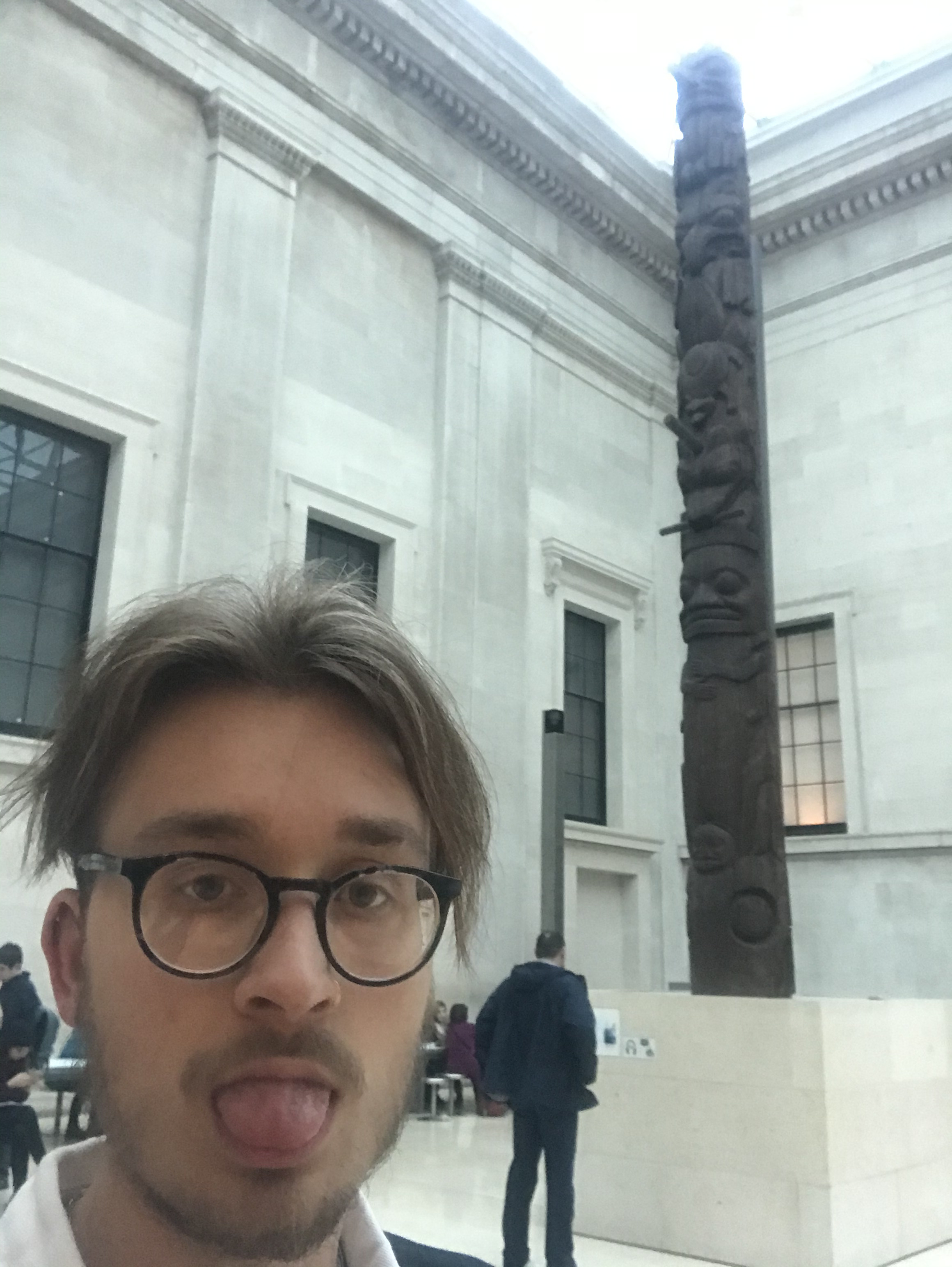
When they buried their leader, following their traditions and customs, they saw him standing at the entrance every day. Before the pain, they would stare at their leader in search of greater things, knowing that if he was somewhere it was just outside of their reach. They used their hands to carve their stories permanently into the wood, leftover remains of their histories, a tangible reminder. I wonder if their smallest would go up and touch these behemoths, rub the woods like the Transcendentalists felt the bark of the trees in their backyard forests. Like the naturalists felt when they were discovering species for the first time.
Inside the wood, the heavy remains of the stories would move through the veins and sap and reach their awaiting fingers like lightning, the stories of people they had heard about their whole lives. They were perhaps not all that different from the stories we tell ourselves, the stories of our great-grandparents, of our grandparents, of our parents, the ones we cling to like lifelines. The Thunderbird or the Man-Underneath is just the older, innate version of the need to know our history, to feel our roots. Perhaps that is why they buried these giants in the ground, to spread their stories like the roots of the trees, far and wide through their villages, their towns, their families. Perhaps that is why we keep them standing in our museums now, to have those stories reach out and inspire, their roots burrowing into our minds and planting seeds.
 Ethan Knox
Leave a comment