By Ethan Knox ’20 on JANUARY 06, 2026 @BingUNews
Binghamton University is working to make you safer one step at a time, and you may start noticing on your way to class or meetings — the classic automated external defibrillators (AED), naloxone (Narcan) and bleeding control cabinets throughout campus are getting a major upgrade.
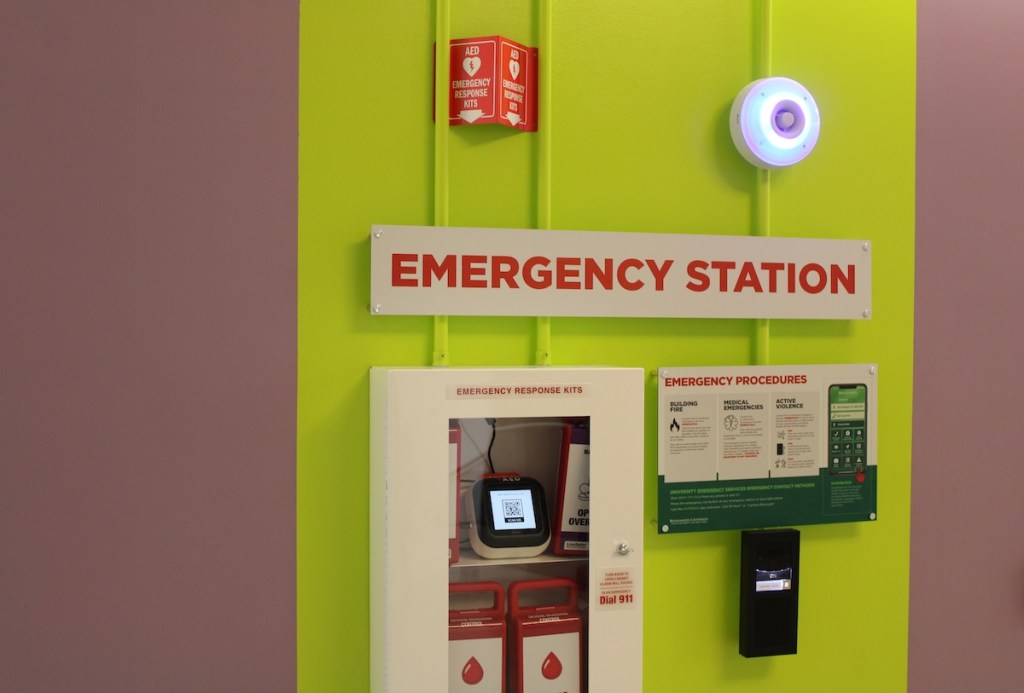
“In addition to those supplies, these stations are outfitted with new tools to share safety information to curious passersby and expedite getting help in an emergency,” said Cait Cavanaugh, associate director for the Office of Emergency Management. “During ’normal’ times, we have emergency procedures information and an instructional video on how to use an AED. In an emergency, with a push of the intercom button, or by opening the safety equipment cabinet door, the stations will activate an emergency call, with video, to the University’s emergency dispatch center,”
But that’s not all that’s different.
“The most obvious update, however, is the appearance,” Cavanaugh added. “The lime-green wall and blue light are dual purpose: In addition to being memorable and easy to find in an emergency, the blue light (which signifies an emergency call button) can also be used with the B-Alert emergency alert system. The light is actually a speaker! We will be able to use text-to-voice integration to share time-sensitive information using one more method to better serve our diverse community.”
The Emergency Station Program marks the next step in proactive readiness for Binghamton University. This program helps make publicly accessible equipment available in an emergency — when stress levels are high — while co-locating integrated technology to aid dispatch and communicate with those experiencing an emergency.
“While a handful of other campuses have also added emergency procedure information to their AED cabinet locations, we may be the first to make a fully outfitted station as a one-stop shop for any emergency,” Cavanaugh said. “The concept of highlighting safety equipment and making safety a key feature in a building is progressive for higher ed.”
The project is a joint effort with several areas across campus, but large contributions have been made by Security Infrastructure and Support within ITS, whose subject matter experts have worked to identify the best technologies to use to meet the University’s needs.
The priority for the emergency stations was prominence. Making sure to provide room for growth, the rollout of the program has prioritized areas where more people gather, but you can expect to see more pop up over time across the University.
“Our campus walls are full of exciting programming fliers and department info — so our AED cabinets seem invisible in comparison. We also wanted to build a more sustainable program, with room to grow inside equipment cabinets for additional equipment to be added in the future,” Cavanaugh said. “Our office is also always tracking best practices and new legislation of publicly accessible equipment.”
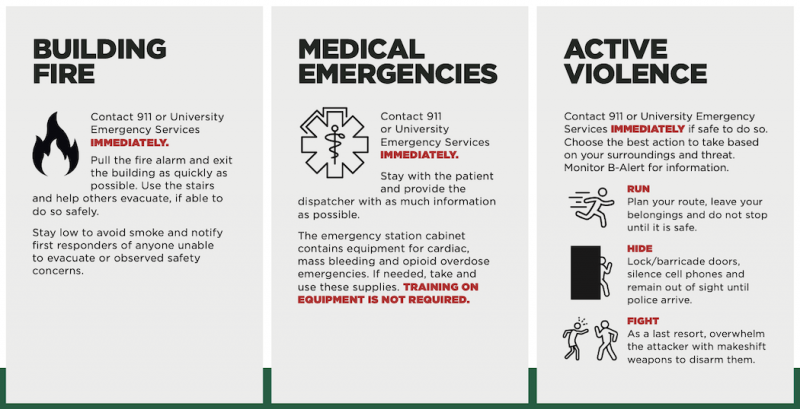
If you are experiencing an emergency, you can reach University emergency services by dialing (607) 777-2222 from any phone or dialing 911; pressing the emergency call button at any emergency station at blue light phone; or using the SAFEBING app and press “Call 911 Now!” or “Campus BlueLight.”




 Ethan Knox
Leave a comment