International program guided by SOPPS dean helps move promising therapies toward clinical trials
By Ethan Knox ’20 on MARCH 23, 2026 @BingUNews
Under the direction of Binghamton University School of Pharmacy and Pharmaceutical Sciences Dean Kanneboyina Nagaraju, a growing, global program is leading the next generation of brain cancer research.
Serving as the chair and with the help of various other experts, Nagaraju guides the Brain Tumour Research Novel Therapeutics Accelerator (BTR-NTA)(opens in a new window), an international program launched under the Tessa Jowell Brain Cancer Mission (TJBCM) that provides guidance to industry and academic researchers, helping position their therapies along realistic pathways to clinical trials.
“Organizing and maintaining groups of incredible scholars providing expert advice to future researchers has always been a passion of mine,” Nagaraju said. “I felt this was an important opportunity to spearhead, and seeing it succeed was crucial to the field of brain cancer research. With the help of so many amazing colleagues, I am honored to participate in the accelerator program.”
TJBCM CEO Nicky Huskens said Nagaraju has been key to transferring essential skills and ways of working to leaders in the brain tumor community.
“He has been fundamental to the development of this program and has brilliantly mentored me and others in the team,” Huskens said. “It is a joy working with him, and he is a very inspiring and energetic leader.”
Nagaraju also believes there is a deeply human and ethical dimension to this work, which has inspired him to strive for success as the program continues to grow.
“In a market-driven system, therapies are often judged by their commercial potential. But suffering is suffering — whether a disease affects millions of people or only a few thousand,” he said. “Patients should never be left without hope simply because their disease is not considered profitable.”
The pathway to innovation
Established in 2023, the BTR-NTA was created by the TJBCM under the model of the TREAT-NMD Advisory Committee for Therapeutics (TACT), an international advisory committee led by leaders in the neuromuscular field. TJBCM had been looking for international programs that support companies or academics at universities who are supporting the development of treatments, Huskens said.
“What struck me about the neuromuscular community and group of people is that in the last 15 years, they managed to approve new treatments and improve outcomes for their patients, and I felt that as a brain tumor community, we could learn from them. It is my wish that we learn from them and in the next 15 years see similar meaningful improvements,” she added. “The TACT team have been brilliant in showing us how we might set this up. Professor Nagaraju has been a key leader in this international advisory committee on TACT, and he gracefully agreed to help the brain tumor community develop something similar but tailored to the needs of these patients.”
Both TACT and the BTR-NTA were created because developing a comprehensive translational program involves navigating complex challenges revolving around safety, clinical trial design, regulatory requirements, and commercialization.
Additionally, in the last 40 years, almost no new treatments have emerged for patients with brain tumors, due to their difficulty to treat, and even though life expectancy is only 12 to 18 months after diagnosis. Historically, most trials have failed to deliver meaningful improvements for these patients.
Since the launch of BTR-NTA, however, 33 international groups have applied to the program (55% academic and 45% industry), and 19 therapies for brain tumors have been reviewed by the BTR-NTA committee during five different review cycles. Two of the applicants, so far, have received funding to commence trials in humans, and 100% of the applicants secured follow-on funding from foundations, government bodies, or investors.
The BTR-NTA’s main goal is to support companies to get their treatments successfully delivered to patients. The support consists of an evaluation of the team’s experimental evidence and progress.
DEDICATION TO TREATING RARE DISEASE
“Nature is nowhere accustomed more openly to display her secret mysteries than in cases where she shows tracings of her workings apart from the beaten paths; nor is there any better way to advance the proper practice of medicine than to give our minds to the discovery of the usual laws of nature, by careful investigation of cases of rarer forms of disease.” — William Harvey
Dean Kanneboyina Nagaraju has devoted his academic career to rare diseases. The quote from William Harvey above has guided him for nearly three decades and served as one of his inspirations for participating in the BTR-NTA project.
“Rare diseases often reveal fundamental biological principles that we might otherwise never see,” Nagaraju said. “Yet relatively few researchers focus on these conditions. That is why initiatives such as TACT and the BTR-NTA are so important. By bringing together global expertise, these collaborations dramatically expand the collective brainpower dedicated to developing therapies.”“We review all the experiments that an applicant has done to date. We could discuss their patents, their interaction with regulators, and especially their future plans,” Huskens said. “We want to make sure those plans are the best they can possibly be, so that the groups are well-positioned to start successful future tests.”
A multidisciplinary approach
Welcoming applications from any research groups developing therapies for brain tumors in academic or industry settings, the BTR-NTA program is free for academics and available at nominal cost for industry applicants.
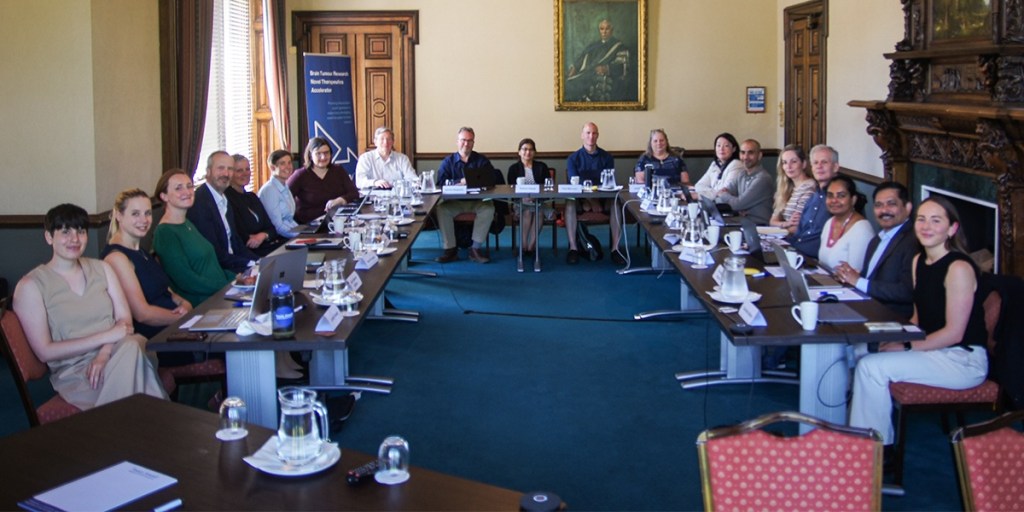
The BTR-NTA is led by a core committee of international experts from within and outside of the brain tumor field, whose expertise spans the entire therapeutic development pathway. This prevents a siloed approach to the development of novel therapies. In addition to the committee, other experts are drawn on for each review to provide guidance specific to the applicants’ needs.
“If they get accepted to the program, applicants will meet in person with 15 world-class drug development experts and spend a day discussing together how to optimize their treatment for the best possible chance of success,” Huskens said. “They get access to regulatory experts, brilliant clinicians, scientists, and members with a commercial background in funding. Afterward, applicants receive a detailed report with advice on next steps.”
Nagaraju and Huskens agree that their biggest hope for the program is to provide a forum for growth for not only its applicants but also its members, and creating a healthy, thriving, research culture, devoted to saving lives.
“My long-term goal is to see our alumni successfully develop new treatments, and that patients with brain tumors to live longer, with a better quality of life,” Huskens said. “As a more short-term goal, I hope that all the applicants to the program — and the members on the review panel — find this a worthwhile educational experience, so that we all learn to improve our drug development skills as a group.”
 Ethan Knox
Leave a comment