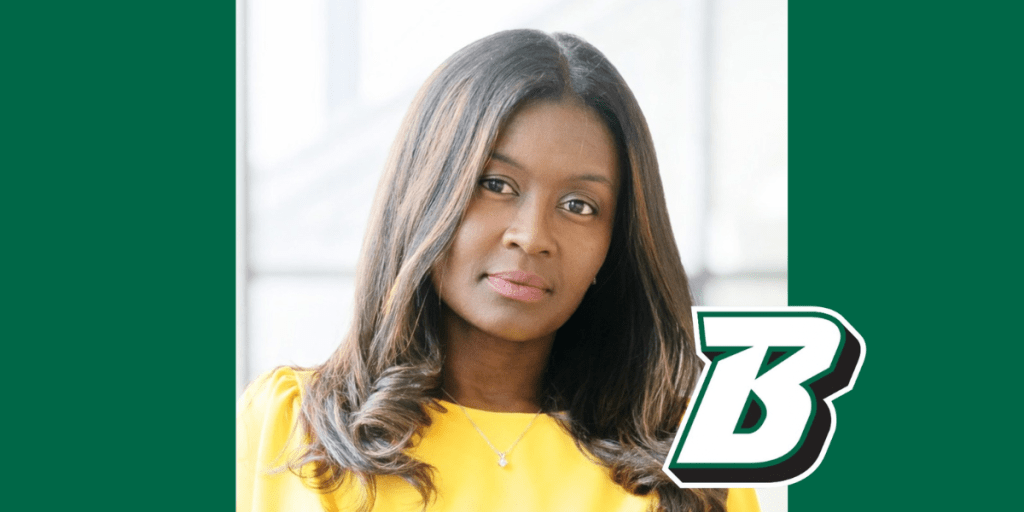
A conversation with Simone Seward on interprofessional learning with TRUST
By Ethan Knox ’20 on APRIL 09, 2026 @BingUNews
What began as an effort to expand opportunities for students has grown into a collaborative, cross-institutional initiative — one that Simone Seward(opens in a new window), DrPH, MPH, has helped shape from the start.
“Simone has been an invaluable partner to Binghamton University, supporting the quality and rigor of The Rural and Underserved Services Tract (TRUST) program since its inception,” said Jacqueline McGinley, associate professor and Master of Social Work program director at Binghamton. “She has played a central role in expanding our work into the Syracuse [New York] area, including coordinating meaningful service-learning opportunities, strengthening retreat content for medical and public health students, drawing upon her professional network to secure expert panelists and speakers, and contributing to our shared scholarship. Her collaborative approach and deep commitment to interprofessional education have significantly enriched the learning and experiences of all TRUST scholars.”
Seward serves as an assistant professor of public health and preventive medicine and as the director of the Community-Engaged Learning Program at Upstate Medical University. In both capacities, she leverages her roles within the university to advance health equity as an educator and community health advocate.
But Seward goes beyond her role at Upstate — she has been working closely with Binghamton’s TRUST faculty to expand the partnership, working to include medicine as a discipline and Syracuse as an urban setting. She now serves as an adjunct professor to Binghamton students, helping them gain valuable interprofessional knowledge.
Working with McGinley and other Binghamton faculty like Rachel Lucas, she has co-led the Refugee Health and Individuals with Developmental Disabilities Learning Retreats in Syracuse. The Refugee Health retreat is in collaboration with the Center for International Health at SUNY Upstate, through which Seward has worked to include local experts to serve as examples of successful care to students.
Seward was also recently awarded the Upstate President’s Award for the Advancement of Diversity, Equity, and Inclusion (DEI), an annual award given by SUNY Upstate Medical University(opens in a new window) to recognize individuals who have made significant contributions to promoting DEI at the university.
Lucas notes that Seward has been more than an advocate for interprofessional education, building bridges between institutions that would not exist otherwise. In Onondaga County — one of the largest refugee resettlement areas in New York state — her work building this learning experience is especially critical, given that students are likely to care for refugee or immigrant patients in their current or future practice. With clinically complex diagnoses and many barriers to receiving appropriate healthcare, learning and reflecting on how patients navigate that process and how to balance health needs is important for student and physician growth.
“It is extremely important that students have opportunities for interprofessional learning, so they can develop these skills that they can later implement as practitioners, which improve patient and population level health outcomes,” Lucas said. “Simone is at the forefront of that work.”
A Q&A with Simone Seward
Seward sat down with Binghamton University to share more about her path to public health, her career and role with TRUST, and the perspectives that inform her work as an educator and mentor.
When did you first become interested in public health?
I’ve always wanted to be in healthcare, ever since I was a child. At first, I wanted to be a nurse, then a pediatrician, but when I got to college, I discovered the field of public health and immediately fell in love. I get to treat more than just the patient; I get to treat an entire community.
What is your teaching philosophy?
With an emphasis on structural drivers of health and health justice, my work bridges public health, medical education, and community engagement. These passions influence how I educate students to think about the larger, contextual factors that affect health outcomes through the eyes of the communities most affected. In TRUST, I encourage and support students to approach communities with the same level of curiosity, respect, and accountability that they would bring to a clinical encounter. My scholarship and practice have focused on building authentic engagement and participatory strategies to ensure that community health interventions and programs are based on the needs and/or assets of the community.
Why did you get involved with TRUST?
Since they already had a rural perspective to the program, I thought this would be a great opportunity to bring the “urban” perspective to the underserved focus of the initiative. I also had a lot of the existing components in place through our Service-Learning Leadership Program that I ran at Upstate, so I thought it would be a good idea to add the IPE component to round out the training.
What do you learn as a planner and mentor from participating in this initiative?
This work continuously reinforces the importance of humility and partnership. Participating in TRUST continues to deepen my understanding of what it truly means to build authentic, reciprocal partnerships with communities and professionals. Planning the learning retreats and service projects requires a delicate balance between a structured, meaningful learning experience for the students that does not come at the expense of the community or the patients we invite to be part of the initiative. I believe TRUST is truly a collaborative experience from start to finish.
Why are interprofessional opportunities important to you and to students?
A critical component of this interprofessional teaching model is the collaborative nature of the faculty who design and deliver the curriculum. We work closely with colleagues across disciplines, including medicine, public health, behavioral health, pharmacy, social work, nursing, and community-based practitioners, who bring diverse expertise and perspectives into the learning environment. This interdisciplinary faculty collaboration models for students what it looks like to engage in team-based problem solving and reinforces that addressing complex health challenges in rural and underserved communities requires multiple lenses and perspectives.
These experiences help students understand the distinct and complementary roles that different professionals play, while also fostering the communication and teamwork skills necessary for coordinated, patient-centered care! Ultimately, my goal is to help students develop not only clinical competence but also a strong sense of social responsibility, preparing them to become health professionals who are equipped to partner with communities and advocate for meaningful, sustainable change.
 Ethan Knox
Leave a comment