First-year Research Immersion Public Health Stream creates a pathway for further education and introduces students to the field
By Ethan Knox ’20 on NOVEMBER 24, 2026 @BingUNews
Aside from the official requirements, there is only one big prerequisite for people who want to pursue public health. “It starts, honestly, with people who care,” says Shane McCarty, research assistant professor in Binghamton University’s First-year Research Immersion (FRI) program and an affiliated faculty member in the University’s Division of Public Health. The program introduces students to applied, community-engaged public health research early in their college career.
This simple charge means that there are students across Binghamton who are interested in public health and could benefit from a formal pathway to the University’s Master of Public Health (MPH) program. As a result, the MPH program has collaborated to create the FRI Public Health Stream, a space that introduces students outside public health to broader strategies and a deeper understanding of well-being.
“The class this year is almost all pre-health students,” says Associate Professor Yvonne Johnston, founding director of the Division of Public Health, who has been an advocate for the FRI program from the beginning. “They want to help people. They want to be in a health system setting, so we let them know about all the different options there are to be part of that — and MPH is one of those.”
Binghamton’s Division of Public Health, within the University’s Decker College of Nursing and Health Sciences, offers the MPH degree, a minor in public health, 4+1 programs, and a new MPH-MS in community health nursing degree.
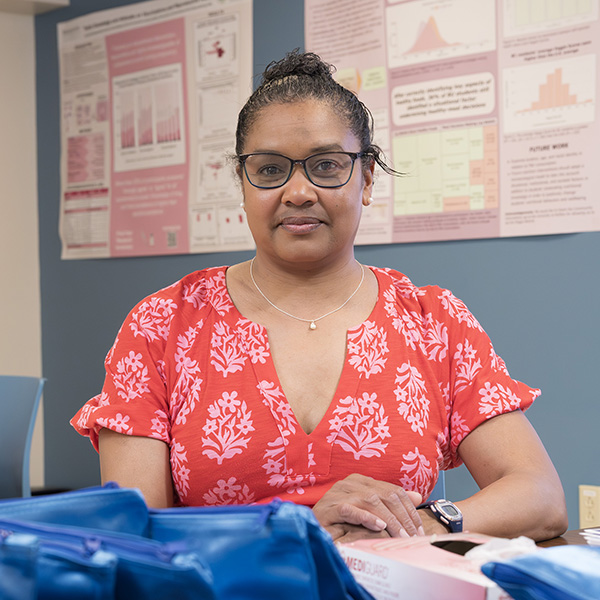
We’re turning knowledge into action for our students and our community — that’s what Binghamton University is about. I’m grateful to do this work and to see our students go into the world and make an impact. — Associate Professor Miesha Marzell
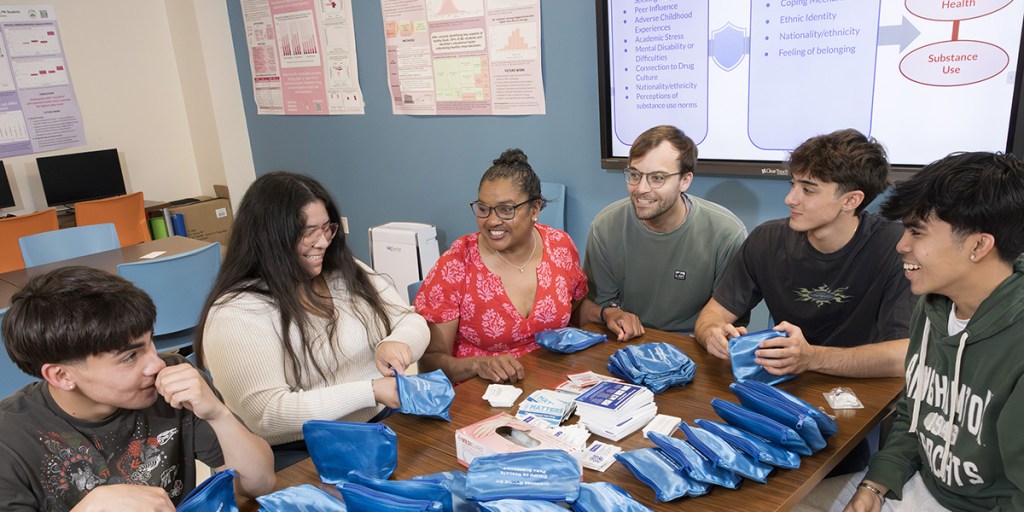
Organized by public health faculty members McCarty and Associate Professor Miesha Marzell, two students from the FRI Public Health Stream applied their research skills last semester on a project with the Addiction Center of Broome County (ACBC), conducting a “Code Blue” evaluation to improve, understand, and strengthen community responses to winter emergency shelter activation.
“The Code Blue initiative really resonated with the students, so we let them take the lead,” Marzell says. “Through this qualitative, community-engaged work, the students met with clients, staff, and leadership, got a full picture of what was going on, and told the story and the importance of this work.”
Students Kurt Roben and Ryan Sood joined labmates Shirley Morocho and Adan Mercado for the project. First, they learned best practices for leading research before collecting their own data and analyzing it over multiple semesters.
Morocho, a senior biological sciences major, got involved in public health after taking a class with Marzell. Although she wants to become a doctor, her interest and curiosity in community care went beyond a minor, so she chose to conduct research.
“I want to be there for my community. Binghamton has a lot of opportunities,” she says. “You can actually help out right in the community. We’re collecting data to prove that not only do people need [emergency shelter in the winter], but do they also like it? What do they want us to improve?”
Mercado, Roben, and Sood also appreciate the opportunity to get involved in a local project and conduct in-person data collection, interacting directly with community members to better understand community health needs.
“ACBC’s UP Comfort Center was eager to be involved with Binghamton University’s Master of Public Health program, as this need in the community must be shared,” says Carmela Pirich, executive director of the organization. “The students were able to interact with the guests, and the guests appreciated their time, attention, and the opportunity to be heard.”
Marzell says that letting policymakers know about the need is just one way the project is important and helps bring the true face of public health to life for students.
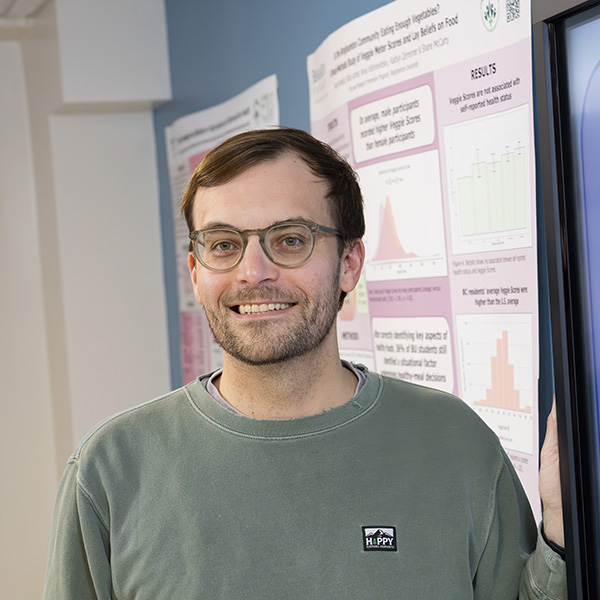
It’s not simply about giving students more experiences, but embedding them within projects and creating opportunities for them to solve the health challenges of our time. — Research Assistant Professor Shane McCarty
Thanks to FRI and other campus resources, students in the generalist MPH program collaborate across disciplines and make real-world community impact while preparing for a variety of careers.
“Students could potentially complete dual degrees with nursing, social work, or public administration. It is a wonderful opportunity for students interested in multiple career paths to develop a different skill set that will complement their work,” Marzell explains.
McCarty, while serving as the faculty advisor for the FRI Public Health Stream, also teaches the health communication course for the public health minor, forming closer ties between FRI stream students and the MPH program. He teaches an expanded concept of health, paving a path for a more deterministic view of the social world — identifying the social structures beyond individual control that shape health. He wants students to find their role in building a healthier, more compassionate culture.
He adds that the curriculum emphasizes structural thinking, ensuring students view patients outside of a biomedical paradigm. In his opinion, the field needs passionate people who take a bird’s-eye view of health to rebuild a public health infrastructure that serves everyone — exactly what the FRI stream is about.
“I’m grateful that we’re able to put students first and develop them into the future public health leaders that we want to see,” McCarty says. “All of us in FRI and public health think deeply about how we conduct undergraduate research in an authentic way. It’s not simply about giving students more experiences, but embedding them within projects and creating opportunities for them to solve the health challenges of our time.”



Leave a Reply