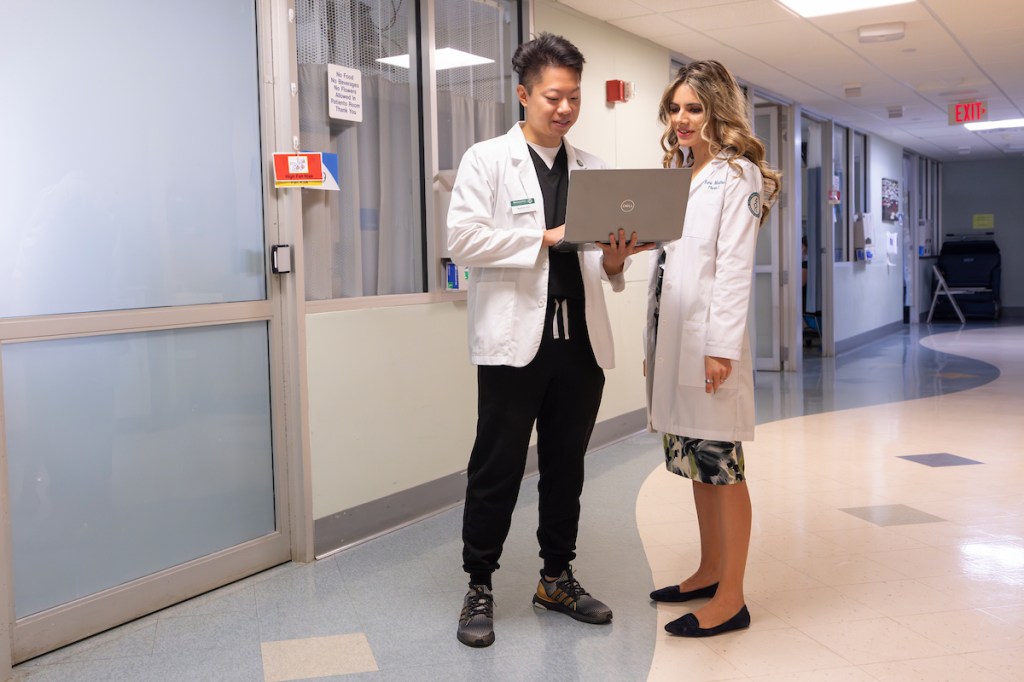
As preceptors, these grads mentor future pharmacists across diverse areas of practice
By Ethan Knox ’20 on OCTOBER 19, 2026 @BingUNews
Pharmacy offers many paths to making a difference.
Improving patient outcomes clinically or advancing drug development are only a few paths to follow. For many Binghamton University School of Pharmacy and Pharmaceutical Sciences (SOPPS) alumni, the best way to make a difference is the chance to guide the next generation of pharmacists.
For these SOPPS alumni, the journey from student to professional has been shaped by unexpected opportunities and a commitment to lifelong learning. Now, as practicing pharmacists and preceptors, Michael O’Shea, Jake Hayes, and Elizabeth Rubiconti are giving back to the community that helped launch their careers and helping future pharmacists discover where their own paths might lead.
Michael O’Shea, PharmD ’23
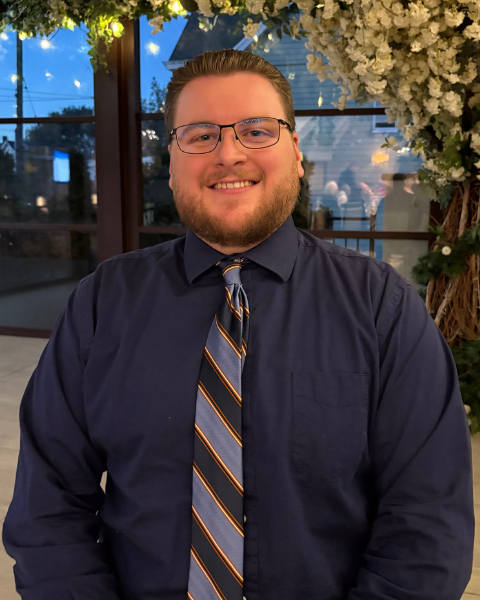
Michael O’Shea is an infectious diseases clinical coordinator at Garnet Health in Middletown, New York. With previous positions at Westchester Medical Center, Maria Fareri Children’s Hospital, SUNY Upstate Medical University Hospital, and Mid-Hudson Regional Hospital, he’s well-equipped for the hospital setting.
Originally from Dutchess County, New York, O’Shea first attended the University of South Carolina, where he spent two years studying pre-pharmacy. He came to be interested in the field after a lucky encounter while working at his local supermarket.
“I was outside, pushing the carts, and there was a big snowstorm,” he recalled. “I came in, and it was me, a cashier, the front manager, and the pharmacist. I was out there in the snow for ages, and I came in to get warm and dry. I was looking at this guy in his white coat, and thought, ‘How do I get that job?’ He took me under his wing. He showed me what pharmacy was and what a pharmacist does — and that eventually led me here!”
When he was looking to pursue his PharmD, O’Shea was instantly attracted to Binghamton. He remembers feeling as if the school was blazing a trail; as a member of only the school’s third graduating class, he was impressed by the school’s goals and tenacity, as well as the kindness of its staff and faculty.
Now, he thinks that ability to adapt he first learned at Binghamton helps him succeed in his career.
“Every day could be a unique situation or an emergency,” he said. “Being able to build something while rolling with the punches and go with it — that’s something that Binghamton really solidified in me. “
Another aspect of Binghamton that helped O’Shea prepare for his career was the chance to conduct a research capstone. O’Shea, who worked with Wes Kufel, clinical professor of pharmacy practice, studied improper antimicrobial use in patients at SUNY Upstate University hospitals.
He named the project as a major boon to residency applications, but even more importantly, it highlighted the importance of antimicrobial resistance — a key part of his current role, one of his key passions, and an essential aspect of the future of pharmacy.
“I really enjoy the fact that people get better when you treat them effectively with the right antibiotic,” he said. “When you treat an infection appropriately, it’s noticeable almost right away. And at a societal level, antimicrobial resistance is something that we all can work for to make the world a better place. We’re trying to make tomorrow a little safer from the next superbug. It’s our responsibility to make sure we’re using the right agents to take care of it.”
His time at Binghamton and his rotations also inspired him to take the next step as a potential preceptor for Binghamton students. With the benefit of his own experience, he hopes that he can make the process of education just a little simpler for future students.
“Teaching is also just so important. I wanted to be the preceptor that I wanted as a student. I want to have a positive impact on the future pharmacist and give them a good look at what we do,” he said. “I tell the students I work with to always ask: How did you get the job that you had? What were your steps? You’re learning the job when you’re on rotation, but you’re also learning about the people and imagining doing that work. I want to be a resource for the people that are coming up.”
Jake Hayes, PharmD ’22
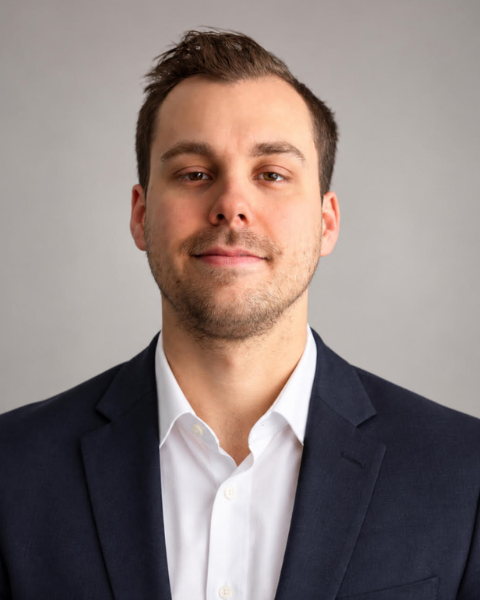
Jake Hayes is a Medicare Part D program manager from the Cortland area. He originally pursued medicine but decided around his second year to consider a different future in pharmacy.
After hearing about the brand-new building and the affordable tuition, as well as meeting some faculty and staff members, Hayes was sold on Binghamton. Once he was there, he was able to find a position working in a managed care company, where he became interested in operations.
“I enjoy trying to optimize care and therapeutic outcomes while balancing cost. Things are constantly changing in managed care, and I enjoy learning beyond the clinical side,” he said. “It gives me a well-rounded picture of how the United States healthcare system works, which I think can be a huge gap in school.”
Now, as an alumnus, Hayes’ role on this side of the clinical setting gives future pharmacists an opportunity to follow in his footsteps. He is excited to be able to offer himself up as a preceptor, not least of all because it gives him the chance to continue learning as well.
“As you get older, you realize how much you don’t know. It’s always important to listen and not to necessarily think you know more than another person,” he said. “There’s always something new to learn. We need 45 hours of continuing education to remain a pharmacist, but it’s just as important to take that mindset into life, generally.”
In Hayes’ opinion, most graduates are focused solely on the clinical front, but he believes the business side is just as important, and graduates will be much more knowledgeable if they pursue it.
“Trying to understand how healthcare is absolutely a business in the U.S., and trying to learn what that means, puts you ahead of the pack,” he said. “Understanding how to pull data, how to interpret data, and how to put together reports can make a big difference in your career. I’m so glad I can give back to the community this way.”
Elizabeth Rubiconti, PharmD ’22
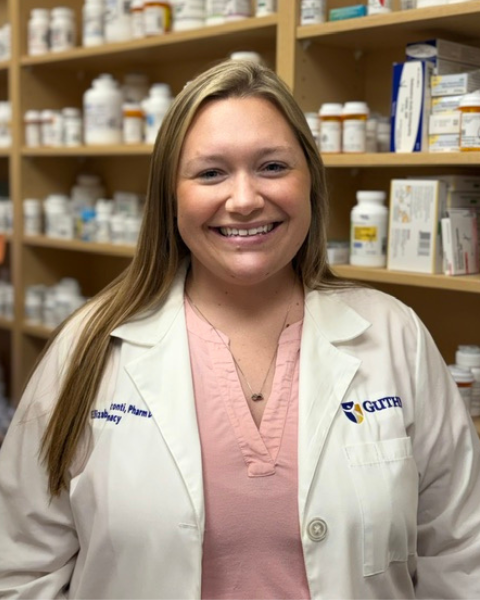
Elizabeth Rubiconti, the outpatient manager at Guthrie Lourdes’ retail pharmacy, pursued her undergraduate studies at St. Joseph’s University, where she majored in biology with a minor in healthcare. She, too, imagined pursuing medical school but decided to return to New York to be with family, where she took a gap year.
When she began working as a pharmacy technician at Wegmans, she realized the field was a route into the medical world that she hadn’t considered, and a way to start making a difference for patients. Later, as she started a family and pursued a career opportunity at Lourdes, a manager encouraged her to advance her schooling.
Starting school just two days after her wedding, she faced challenges returning to college, especially as an older student.
“I still worked during pharmacy school, and I used my time the best I could,” she said. “Ultimately, I had some excellent rotations during pharmacy school that kept me motivated to finish. It was a great experience to see the different levels of pharmacy, even though my heart is in community. I enjoy talking to patients and counseling, and Binghamton made it possible for me to advance in that setting.”
Now, a normal day at work for Rubiconti has many facets. As a pharmacy manager, she staffs each shift; she also works with that staff to transcribe prescriptions, making sure that what is entered is what the doctor intended. She also ensures prescriptions match the medication that is being handed out, takes prescriptions to patients’ rooms, reviews charts, and counsels at the counter.
One of her favorite aspects, of course, is teaching future pharmacists.
“I really do have a passion for leading the next set of pharmacists into the world and being a guide or a resource for them,” she said. “I’ve always wanted to be a preceptor. I was a tutor throughout school, and I’ve always had a strong passion for education — it was a perfect fit.”
Part of the process, like O’Shea and Hayes, is learning and adapting. One of her first students, for example, came to her while the pharmacy’s systems were down because of a cyber event affecting Ascension, the company that previously owned Lourdes.
For Rubiconti, that sounded like a nightmare — but for the student, it turned out to be the exact kind of learning opportunity she needed.
“Her feedback was the complete opposite of what I expected — that it was such an experience to be a part of something like that, and it wasn’t anything she thought it was going to be,” Rubiconti said. “It certainly made me need to pivot immediately, and it kept me on my toes! And I appreciated her energy about it — it taught me that change is part of the process.”
With the knowledge that rotations can be intimidating — students essentially spend six weeks getting comfortable, just to move on to another learning opportunity — Rubiconti hopes to serve as a stalwart for students. Her hope is to make each one more confident and help them find their place in the world.
And for some, she hopes that place remains the Binghamton community.
“I would love for more Binghamton graduates to stay local, and I would love for an expansion in community pharmacy. Residencies and academic positions are completely needed, but sometimes it’s hard to get a residency, and it’s just not in the cards for what a student might want to do,” she said. “I hope that our students can see that a community job can be super rewarding, despite its challenges. I’m happy to have the pharmacy school here, because it provided and continues to create an opportunity that I and many students wouldn’t have had.”


Leave a Reply