
Prince Karmacharya and Andrianna Poznahovska use molecular research and AI to study life-threatening lung disease
By Ethan Knox ’20 on JULY 23, 2026 @BingUNews
Rising P3 PharmD student Prince Karmacharya and Andrianna Poznahovska, an undergraduate pursuing a degree in integrated neuroscience, are working separately with Assistant Professor of Pharmaceutical Sciences Yuanjun “Steve” Shen on two projects related to pulmonary arterial hypertension (PAH), a prevalent, dangerous, and often deadly lung disease.
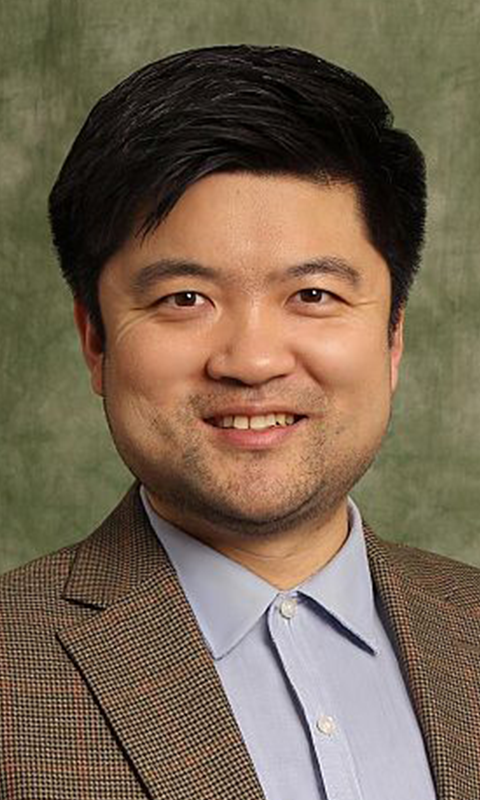
“Dr. Shen has been supremely helpful in getting me acclimated to the lab,” Karmacharya said. “He’s been very professional and friendly, and I would say that was one of the main reasons why I was drawn to working in this lab. I wanted to be a part of all those radical ideas he discussed.”
Karmacharya’s project aims to identify whether certain proteins activate a master protein that then triggers cells in the lungs to multiply and divide rapidly, causing the arteries there to thicken, which eventually leads to hypertension in the lung arteries. Identifying that master protein and what activates it, such as protein phosphatases (PPPs), is the first step in deactivating the root cause of the disease. A more detailed understanding of disease progression, such as how these proteins interact with each other, will help the team to design new drugs against PAH.

“I want to be able to understand how to formulate a hypothesis for why a disease occurs the way it does, and what can be done to find a medication to treat it,” said Karmacharya, who presented on the disease several times during his P2 year and wanted to learn more. “Overall, I am interested in this as an opportunity to learn in general. There’s a lot of preconceptions about lab work, and I wanted to engage and find out what it truly looked like here at the Shen Lab.”
Poznahovska’s side, while also touching on genotyping and finding targets to study, is focused on developing a digital twin model using machine learning. This digital 3D model could then be used to drill down to a vascular or cell level, with the main goal of being used as a diagnostic tool to help predict disease progression. Additionally, her projects include understanding how lung arteries become abnormal when a fetus develops congenital diaphragmatic hernia (CDH), a disease that itself can be corrected but leads to pulmonary hypertension, which is deadly to newborns. She is currently inputting parameters to help the machine learning create a model progression for her research focuses, and is excited to have the opportunity.
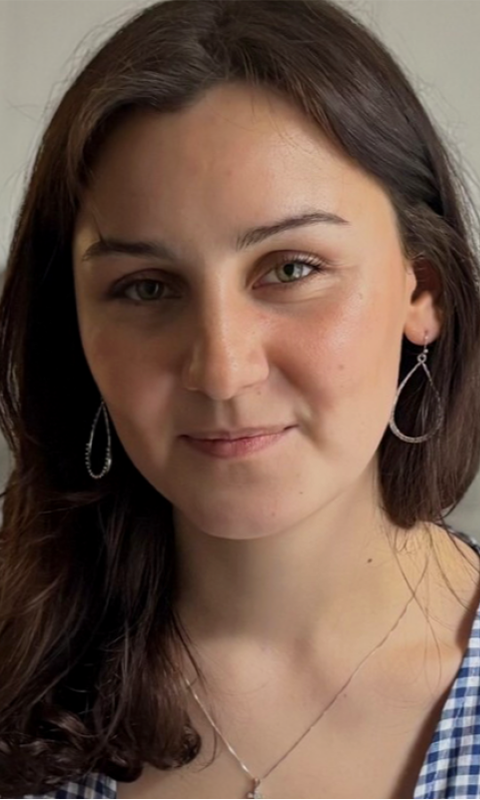
“Over the summer, you definitely have more time,” she said. “I don’t think I would have been as able to spend as much time here during the school year, working here full time, and would not have gotten as much experience.”
Poznahovska, who transferred to Binghamton and joined the lab after attending a faculty mixer where she met Shen, also has experience as an EMT. She hopes to go on and become a doctor someday; she believes that Binghamton, and experiences like this, will help her to that goal.
“Dr. Shen encourages a great learning environment, and he’s friendly to talk to. There’s no fear of making a mistake. I’m in this program because I don’t have a lot of research experience, so he goes out of his way to make sure that I gain it,” Poznahovska added. “I went from a smaller school to this giant research institution like Binghamton, and at first, it was overwhelming. But I’ve grown into it with this support, and it’s been a great experience. I’m so grateful to be here.”

 Ethan Knox
Leave a comment